

By Sahl Masood Ahmed
Silence on a football pitch is rarely a good sign. When Hugo Ekitike went down, the immediate fear was confirmed shortly after. An Achilles tendon rupture is a devastating blow that instantly shifts the atmosphere around a player and their club.

Hugo Ekitike, Credit: The Anfield Wrap
The recovery timeline stretches for months, demanding intense physical and mental endurance, and unfortunately, it rules him out of the World Cup. An Achilles rupture is a complete tear of the thick band connecting the calf muscle to the heel. There’s a lot of talk about the successful recoveries of athletes like Kobe Bryant and Kevin Durant, who managed to play on. For a footballer, the mechanics are entirely different. The constant multidirectional shifting, sudden acceleration, and reliance on explosive push-off from soft grass make the Achilles load unique. A basketball court offers a hard, predictable surface, whereas a football pitch is uneven and demanding.
The Loss of a Ceiling
The "disappearance" of a player like Presnel Kimpembe serves as a haunting blueprint for the worst-case scenario. Ekitike’s former teammate at PSG didn't just suffer an injury; he effectively vanished from the elite footballing consciousness for over 400 days. When he finally re-emerged, the dominant, front-footed defender who had marshalled Champions League backlines appeared replaced by a cautious, tentative shadow of his former self.
Callum Hudson-Odoi articulated the brutal reality. He admitted that upon his return, he did not feel powerful, could not outrun opponents, and had a severe loss of muscle. He acknowledged that he needed to drop down a level to find regular football and get his confidence back. For a young player, the failure is not always immediate retirement. It is the loss of a ceiling. Hudson-Odoi transitioned from a potential world-class talent to a decent Premier League winger.
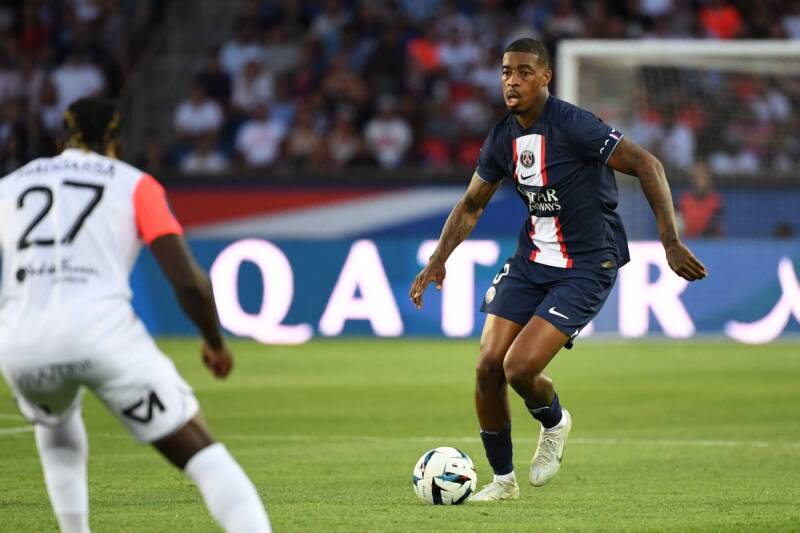
Presnel Kimpembe, Credit: Get Football
Adapting to the Reality
Some players are forced to confront their new physical limits and completely rebuild their games. John Barnes suffered the same rupture. Stripped of his blistering pace, he transformed into a holding midfielder, relying on intelligence and positioning over raw speed.
David Beckham addressed his changing body after his injury. He made a lifestyle and career change, moving from AC Milan to LA Galaxy to slow his play and adapt to a different tempo. He found a new alignment with his physical capabilities, relying on his vision rather than his legs.
The Success Stories
There are instances where players return and dominate. Leonardo Spinazzola refined his game, becoming more tactically disciplined. He was a vital component in AS Roma's UEFA Conference League victory and reaching the Europa League final the following year, proving that a player reliant on overlapping runs can still excel in European football.
Axel Witsel provides another template for hope. After rupturing his Achilles tendon in 2021 at the age of 32, he returned to play for Belgium in just five months. Rather than fading away, Witsel reinvented himself. By trading his box-to-box midfield role for the tactical discipline of a central defender, he extended his career at the highest level, eventually becoming a vital figure for Atletico Madrid and continuing to anchor Girona’s backline well into 2026.
Then there is Santi Cazorla. Sidelined for 636 days, he returned to Villarreal in 2018. Many dismissed the move as a sentimental farewell. Instead, Cazorla became one of the best midfielders in Spain again. He forced critics to confront his brilliance, scoring 11 goals and providing 10 assists in the 2019/20 La Liga season. At 34, he earned a recall to the Spanish national team. Even now, in April 2026, the 41-year-old remains a key figure on the pitch for Real Oviedo, having helped lead them to promotion just last year.
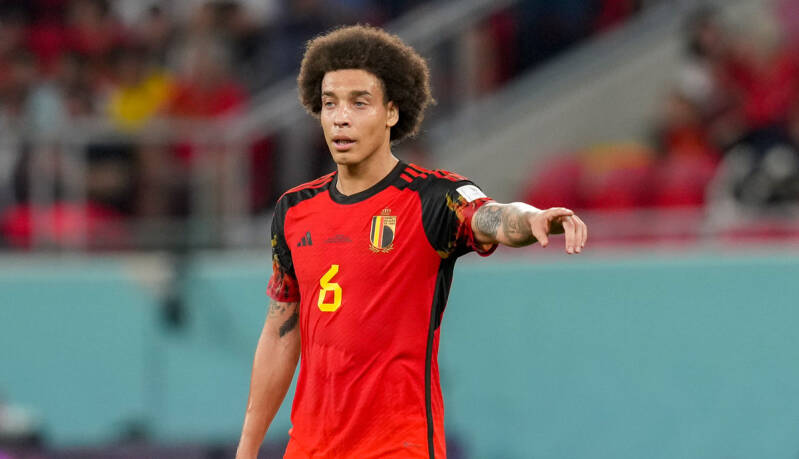
Alex Witsel, Credit: Dynamo.Kiev
The Road Ahead for Ekitike
Ekitike's long-term future at Liverpool now rests entirely on his rehabilitation and mental resilience. The foundations of his game will be tested. Liverpool must manage his workload carefully, understanding that the forward who returns may not have the exact same physical profile as the one who left. He must be prepared to evolve. The forward trajectory of his career depends on his willingness to accept a new physical reality and adapt his playstyle to ensure his longevity at the highest level.
The current season has wrapped up, leaving Ekitike’s setback to settle in fully. He’s confirmed to miss the World Cup, but the timing at least offers a small window of clarity: the entire summer can be dedicated to recovery, rehabilitation, and rebuilding without the pressure of competitive fixtures.
Add comment
Comments