

By Steve Northover
The Jürgen Klopp-era at Liverpool was full of ‘moments’. From Mo Salah dancing his way through Manchester City's defence, to Allison Becker scoring a last-gasp header against West Brom, to Christian Benteke breaking Klopp's glasses in a ‘celebratory scrum' after Liverpool beat Norwich 5-4 early in the German's reign.
Credits: This Is Anfield
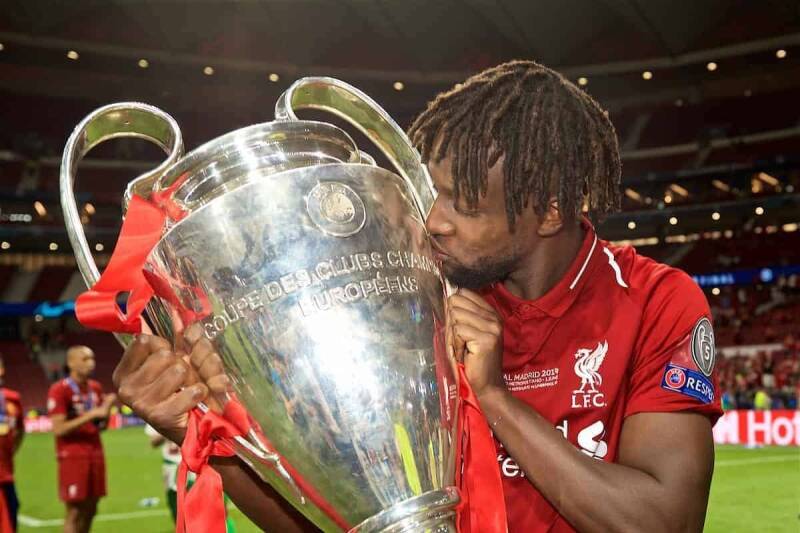
But two moments define that period of time more than any other - Liverpool 4-0 against Barcelona and beating Tottenham Hotspur 2-0 on the Champions League final.
Divock Origi was involved in both.
Never a goal machine - just 69 goals in his entire career - the Belgium forward has long cemented himself as one of the Reds most iconic strikers, has now announced that he has retired from professional football.
Born in Ostend to Kenyan international Mike Origi, he started his youth career at Genk, before moving on to French side, Lille. But within two years he had attrached the attention of Liverpool, who immediately loaned him back.
Credits : This is Anfield
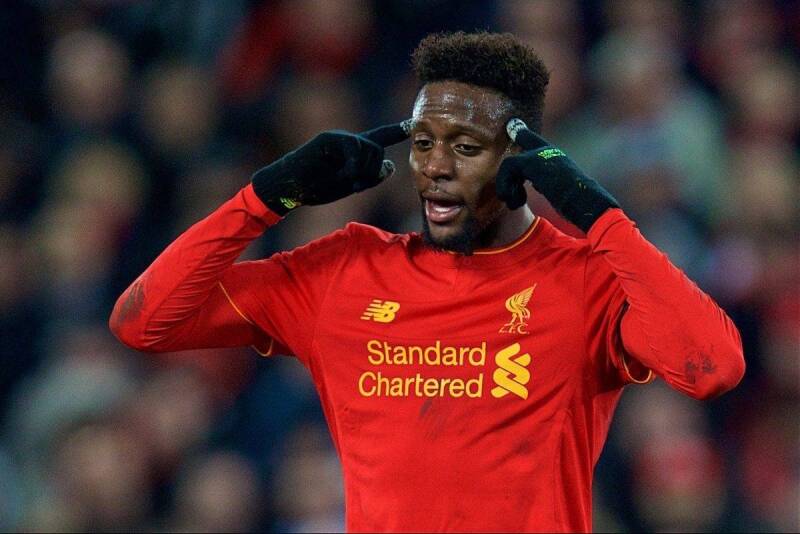
As such, Origi made his debut for the Reds in the following summer of 2015. Used mainly as backup striker in a Liverpool severely lacking the exploits of Barcelona-bound Luis Suarez, Origi did not score his first goal for the club until a League Cup match in December 2015.
However, under Jürgen Klopp's gegenpress focused style of attacking football, Origi began to show real flourishes of talent - albeit fleetingly. Helped by the unfortunate ligament injury suffered by Danny Ings, he effectively became Liverpool's ‘’second striker' behind Daniel Sturridge, often coming on to replace the Englishman as Klopp sought to minimise wear and tear on the injury-prone striker.
Throughout his career at Anfield however, Origi had yet to shake the opinion that he was a ‘bit part player' - able to see out a game as a substitute, but very seldom anything more valuable. Even a season-long loan at German side Wolfsburg, where he scored just six goals, did little to change that opinion.
But in many ways, it was his biggest strength. Origi was known for his natural attention, his introspective attitude and self analysis, saying at one point, In an interview with The Guardian, he said
“Maybe if I wasn’t a footballer I’d be a psychologist.”
As such, no one was more aware of his pecking order with the Liverpool hierarchy - especially after the emergence of Roberto Firmino - than Origi, but he understood that under Klopp's Liverpool, being a part of the team was as important as being in it.
By Origi just being in the squad, Liverpool began to have the mentality that would lead them to inevitable league titles - even if he only played the last five minutes, if the score was 1-1 or 0-0, he would likely find himself with at least one chance to win it.
Credits : Legit.ng
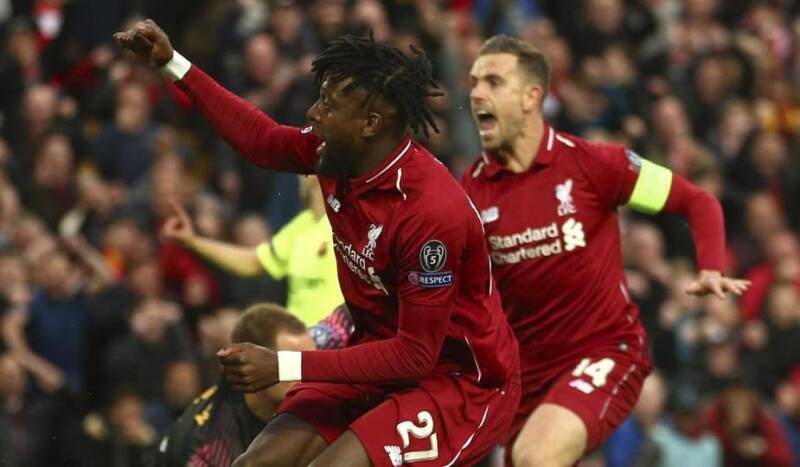
Enter 7th May 2019 . By the fifth year of Jürgen Klopp's reign at Liverpool, the Reds had transformed themselves from ‘also rans' to being amongst the cream of European football. A year earlier, having completed a memorable comeback away win against Manchester City, the team lost the final of the Champions League against a rampant Real Madrid. By the end of the 2019 season, it seemed lovely that Liverpool would fall even earlier, after losing 3-0 away at the Nou Camp.
To make things worse, both Mohammed Salah and Roberto Firmino were ruled out for the second leg at Anfield - meaning that Divock Origi would be leading the line to complete another unlikely comeback for Liverpool. Indeed, despite a bullish and hopeful Anfield home crowd at kickoff, it seemed more likely that Liverpool were playing more for pride than anything else. However Jürgen Klopp thought differently,
He believed and so did Origi. Before the game, he stated
"If we can do it, wonderful. If not, then fail in the most beautiful way.”
To be fair, Barcelona had proven before that they could be ‘got at' - losing to Roma the year before, having won the first leg 4-1. So there was, albeit fleeting, that if Liverpool scored first then it was game on. Indeed, pre-match, Anfield was at its vociferous best - the opposition was greeted by a sea of red smoke and tens of thousands of fans. Inside, the stadium rocked with the noise of fans hoping rather than expecting.
It did the job. Barça, for all their world beating players, appeared completely shell shocked by the atmosphere. All the while, the Liverpool players seemingly grew another two feet taller.
With the Spanish side unable to get a foothold in the game the Reds ran riot, soaking up any Barcelona attack at source before going on the counter. It only took seven minutes for the first goal to be scored, with goalkeeper Marc-Andee ter Stegen unable to get hold of a Jordan Henderson shot, with Divock Origi tapping in from a few yards out.
With Barcelona under the cosh, the expected ‘meltdown’ had begun. Barcelona already seemed spent inside the first twenty minutes, and although they would get their chances, it only ever looked like Liverpool's to lose. This was Origi's time to shine, a free flowing Liverpool, under the lights of a European night at Anfield - it's the stuff dreams are made of, and he flourished.
Despite their dominance, Liverpool were still only 1-0 at half time. It would only take one chance for Barcelona to make the game theirs beyond doubt.
So Klopp made the changes, Gino Wijnaldum on for Andrew Robertson coming on at half time. With Wijnaldum in midfield, playing more advanced than James Milner (who had moved into the left back position), it allowed the forward line to be more advanced and the Dutchman able to operate in the ‘hole’ between
Barcelona's defence and midfield. It was a masterstroke from Klopp, as within twelve minutes of the restart - and roughly 140 seconds apart - Wijnaldum had scored two goals to take the Reds level with Barcelona. So with ostensibly an hour on the clock, the mood has switched from ‘if’ Liverpool would win, to when. The world had to wait around another twenty minutes for a goal that has gone down for it's vision as much as anything else.
Credits : Liverpool FC
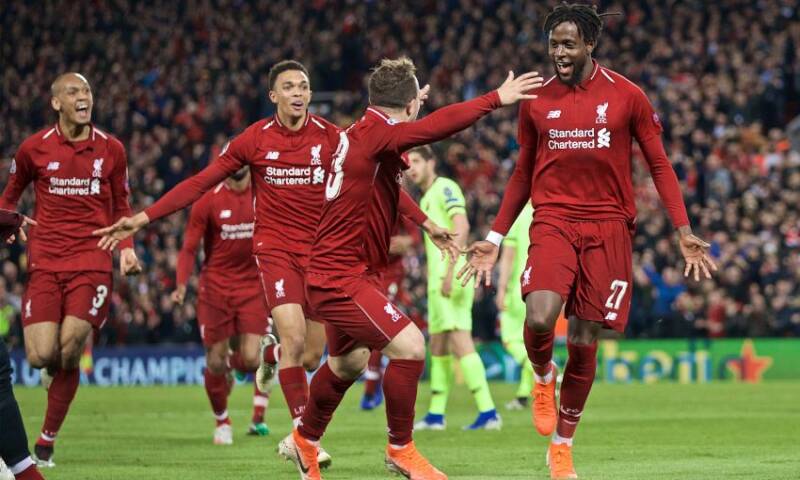
After having a pass deflected out for a corner kick, Right Back Trent Alexander-Arnold had spotted Origi unmarked in the middle of the penalty area, with Barcelona yet to get into their defensive positions.
Queue pandemonium.
Origi was able to guide the low pass into the Barcelona goal. Such was the sheer shithousery of the move, there as a second were tone seems to stand still, waiting for the referee to rule it out as the opposition were not ready - underneath the din of the Anfield crown, no one had heard the referees whistle to allow Alexander-Arnold to take the kick.
It was, by far and away, Origi's most important goal, possibly of his career, but certainly his time at Anfield. Something his winning goal against Spurs in the Champions League final a few weeks later couldn't even beat. But it was also the culmination of a career that had been dominated by patience, and an intelligence to understand where he stood in a team full of world beaters.
As Liverpool now move into a new era under Andoni Iraola, who looks likely to bring the same style of aggressive attacking football that Liverpool played under Klopp, there will be a number of players wondering what the future may have in store for them. If they're looking for advice, then they'll need to look no further than Origi, and understand what it means to be a machine greater than the sum of their parts.
Add comment
Comments