

By Sahl Ahmed
Liverpool Football Club currently faces its most profound identity crisis in a decade. Eleven defeats in a single campaign tell a story of a system in total mechanical failure. The brilliance of last season's title run is now being re-evaluated not as the start of a Slot dynasty, but as the final, flickering embers of the Klopp regime.
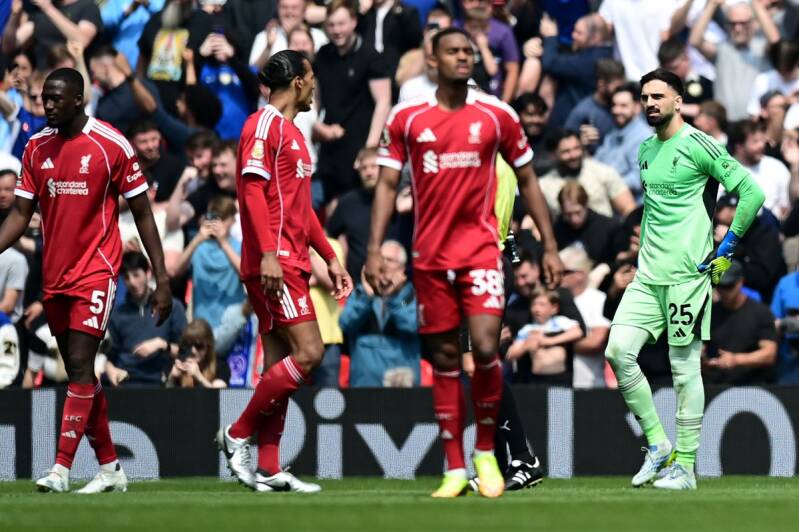
As the inherited physical imposition fades, it has been replaced by a sterile possession that lacks both the teeth to bite and the lungs to endure. The "Mentality Monsters" have been replaced by a squad that looks statistically and spiritually under-cooked for the relentless demands of the Premier League.
The underlying data reveals a severe drop in physical imposition. Pressed sequences have fallen from 18.1 per 90 minutes under Klopp to just 12.6, representing a 30 percent reduction in sustained pressure on the ball. Furthermore, high turnovers have dropped from 10.7 to 8.3, and overall ball recoveries have crashed from 64.4 to 48.5 per match. This highlights a team that is no longer hunting in packs to win possession.
Credits - Liverpool Echo
The structural transition from Klopp’s all-powerful manager role to the FSG-preferred head coach model, overseen by Michael Edwards and Richard Hughes, was designed to streamline club operations. Instead, it has coincided with a profound identity crisis on the pitch. Supporters are enduring what many describe as turgid performances, watching a squad trapped awkwardly between two conflicting philosophies. They are no longer a transition monster, nor have they evolved into true possession masters.
Even as their share of the ball has increased, peaking at 65 percent in recent fixtures, the volume of open-play pass sequences of ten or more passes has dropped from 18.0 to 14.3. This points to sterile possession rather than purposeful, attacking build-up. The creative workload has shifted away from the flanks, with full-back assists plummeting from a peak of 25 down to a combined total of seven in Slot’s first full cycle. The warning signs were visible early on. The underlying expected goals differential began a consistent slide in October 2025, long before the results fully turned sour, suggesting the new regime was masking cracks for months.
The Training Ground Gap
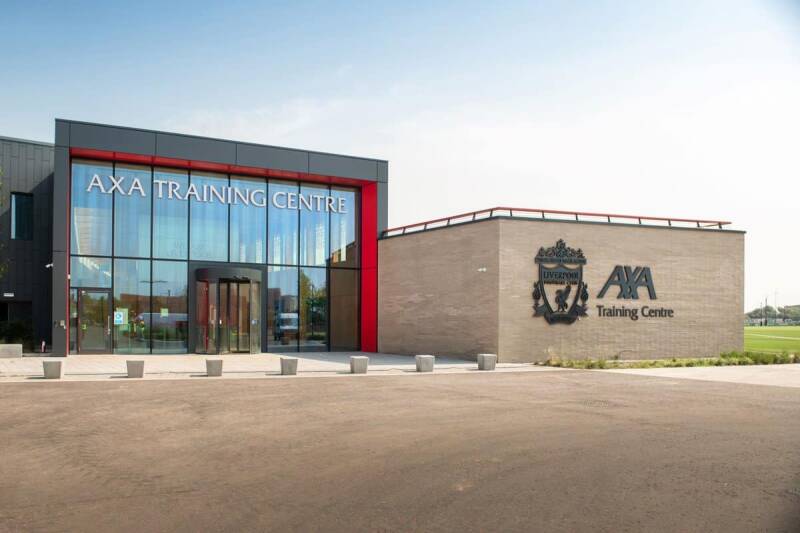
The atmosphere at the AXA Training Centre has fundamentally shifted, creating a friction between preparation and match-day reality. Jürgen Klopp was famous for cranking up the physical intensity 48 hours before a fixture, ensuring players were conditioned for combat. Slot has introduced a contrasting policy, preferring to ease off training intensity as games approach. Reports indicate his regime decreases the physical workload by 15 to 20 percent in that same two-day window, granting the squad an average of 1.5 more rest days per month.
This ease-off policy was implemented to protect players, yet it appears to have backfired spectacularly. The narrative of too many breaks has emerged as a genuine concern, with evidence suggesting the lighter schedule is leaving players undercooked for the relentless spikes of Premier League football. Sidelined players currently account for 28 percent of the club's total wage bill. The injury crisis has robbed the team of key personnel, including the frustrating losses of Florian Wirtz and Alexander Isak to recurring muscle fatigue. These non-contact soft tissue injuries are a common byproduct of a drop-off in training intensity that fails to prepare the body for 95 minute athletic demands.
Credits - This Is Anfield
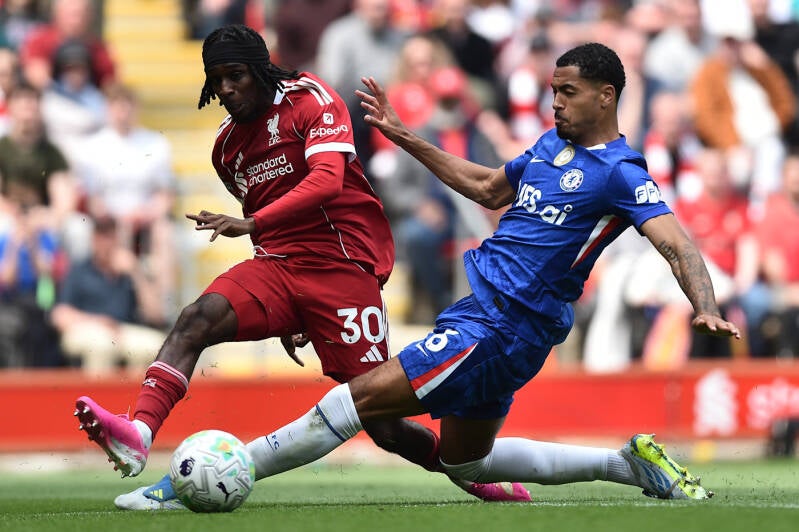
The physical regression among the remaining stalwarts is equally alarming. Liverpool have been outrun by their opponents in 26 of their 30 league games this season, highlighted by a staggering nine-kilometre deficit in a recent 4-0 loss to Manchester City. Average presses have dropped by 20.4 percent year-on-year to just 141 per match, leaving Liverpool as the lowest-pressing team in the division.
Individual athletic metrics are also suffering. Mohamed Salah’s high-speed sprints above 25km/h have declined by 12 percent per 90 minutes. Observers are forced to confront whether the current training regime is rigorous enough to maintain the twitch fibres required for elite wingers or the recovery speed needed by defenders like Ibrahima Konaté. This lack of conditioning inevitably translates to late-game fatigue, with Liverpool conceding 65 percent of their goals after the 60th minute, the highest percentage among the top six.
Tactical Purism in a Physical Environment
Slot has never hidden his self-confessed obsession with possession-based, fluid football, heavily modelled on Pep Guardiola’s Barcelona. However, this tactical purism has hit a firm wall against the physical evolution of English football. Executing such a demanding style requires absolute athletic dominance, something his squad currently lacks.
The head coach recently acknowledged the difficulty of his environment, calling the Premier League an outlier division. He cited the league's heavy focus on set-pieces and the tolerance for physical fouls on goalkeepers as factors that make the competition less of a joy to watch. The numbers validate his frustration. A significant 27.5 percent of all goals in the league this season have originated from non-penalty set-pieces, an area where Liverpool have consistently struggled to cope with the sheer physicality.
Credits - Chelsea FC
Attempting to enforce his Eredivisie ideals, Slot shifted from the reliable 4-3-3 formation to a 4-2-4 and 4-2-3-1 hybrid. This structural change carries immense risk, resulting in a broken team where the midfield is frequently outworked in the engine room. While they maintain a high possession average of 58 percent, their conversion of that control into an attacking threat has plummeted. At Feyenoord, his system generated 18.4 shots per game, but that figure has dropped to 13.2 against the low-block defences of the Premier League.
When possession inevitably breaks down, the structural flaws are exposed brutally. Liverpool currently lead the Big Six for goals conceded from fast breaks, allowing 14 so far. His high-line possession structure is being consistently exploited by superior transition speed. Having dropped to 15th in the league for sprinting volume, the tactical drills seem to be sacrificing the explosive burst required for English football, leaving his purist ideals vulnerable to raw athleticism.
A Return to the Comfort Zone
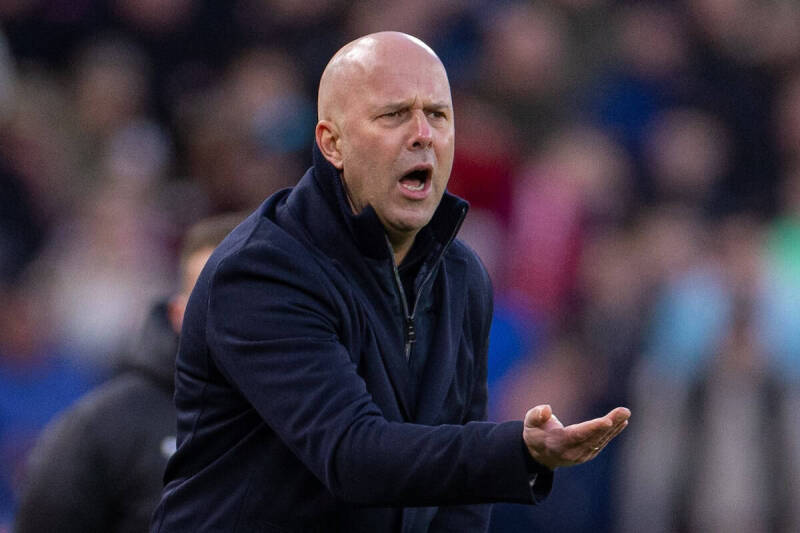
Reports emerging from Amsterdam suggest a potential escape route is forming. Ajax technical director Jordi Cruyff has been actively sounding out Slot regarding a return to the Netherlands for the 2026/27 campaign. This creates a fascinating professional conflict. Slot made his name by turning Feyenoord into champions. For a former Feyenoord manager to be positioned as the primary target for their fiercest rivals speaks volumes about his sterling reputation in Holland, which contrasts sharply with his deteriorating standing in England.
Credits - This is Anfield
The Ajax and Eredivisie ecosystem offers a safe haven for his specific philosophy. Dutch football prioritises technical control and positional play over raw physical transitions. The data aligns perfectly with why this union makes sense. Slot’s Liverpool have completed over 38,000 passes this season, the highest total in the division. While this high-volume passing style is increasingly viewed as a vice in England, Ajax see it as a virtue that perfectly fits their cultural demands for Total Football.
The statistical disparity between his domestic and continental records is stark. His career win rate in the Netherlands stands at 66 percent, peaking at 76 percent, whereas his 2025/26 Premier League win rate has stagnated at just 50 percent. Defensively, his final Feyenoord team was a fortress that conceded only 0.8 goals per game, but his current structure leaks 1.35 goals per game in a faster, more punishing league. Slot has openly stated his football heart beats for a technical, less physical style. An approach from Ajax offers a return to an environment that inherently respects and supports his methods.
The Ownership Verdict
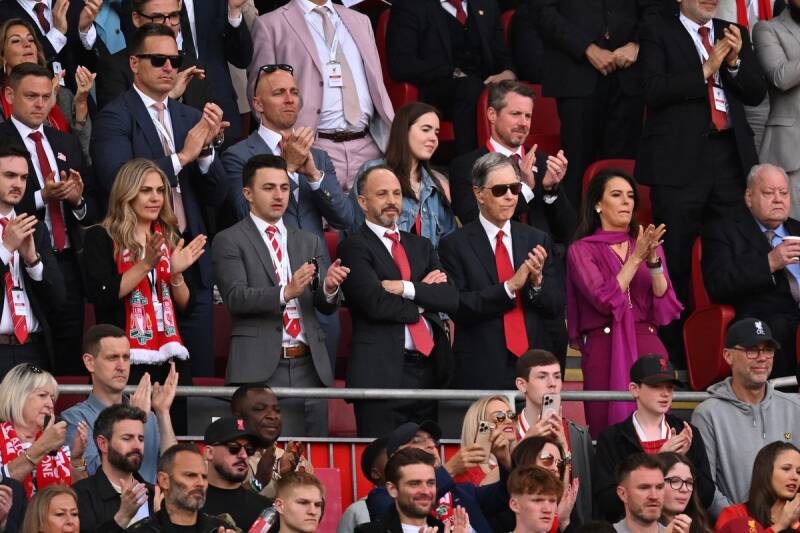
The hierarchy at Fenway Sports Group must now evaluate the trajectory of their footballing operation. Publicly, FSG are maintaining stability and standing by Slot. He accumulated significant credit in the bank from last year’s title win, meaning the board is willing to tolerate some of the unacceptable results witnessed during the current campaign.
However, FSG are famously unsentimental and reliant on clinical data, and the metrics point towards undeniable stagnation. This raises the prospect of a mutually beneficial exit. A move to Ajax could be framed as a strategic step down rather than an outright failure, allowing Liverpool to avoid the prolonged decline years that often plague the end of long-term managerial projects.
Credits - Liverpool Echo
The presence of Xabi Alonso on the free market casts a long shadow over Anfield. The availability of a club legend adds immediate, intense pressure to an already strained environment, making Slot’s position increasingly untenable if he refuses to adapt his training intensity. Ultimately, the situation highlights a profound irony. Slot possesses immense tactical acumen, perhaps making him technically too good for the Eredivisie, yet his methods appear too rigid for the chaotic demands of the Premier League. The interest from Ajax is not just a job offer; it is a tactical rescue mission for a manager whose ideals are being suffocated by the world's most physical league.
Add comment
Comments